

Under Australia’s National Disability Insurance Agency (NDIS), Assistive Technology (AT) is defined as:
“Any device or system that allows a participant to perform tasks they would otherwise be unable to do, or that increases the ease and safety with which tasks can be performed.”
Assistive Technology can include commercially available products, modified equipment, or custom-made solutions that support a person’s independence, participation, safety, and quality of life.
The NDIS generally categorises Assistive Technology into four levels based on complexity and cost:
| Level | Description | Examples |
| Level 1 | Low-risk, low-cost | Non-slip mats, simple eating utensils, shower chairs |
| Level 2 | Low to moderate complexity | Walkers, pressure cushions, medication aids |
| Level 3 | Higher complexity | Powered wheelchairs, communication devices |
| Level 4 | Complex or custom solutions | Custom seating systems, environmental control systems, highly specialised equipment |
For funding under the NDIS, Assistive Technology should:
- Be reasonable and necessary to meet the participant’s disability-related needs.
- Help the participant pursue their goals and improve independence.
- Represent value for money.
- Be effective and beneficial based on evidence.
- Not be more appropriately funded by another government service (such as the health system).
Medication administration and dysphagia
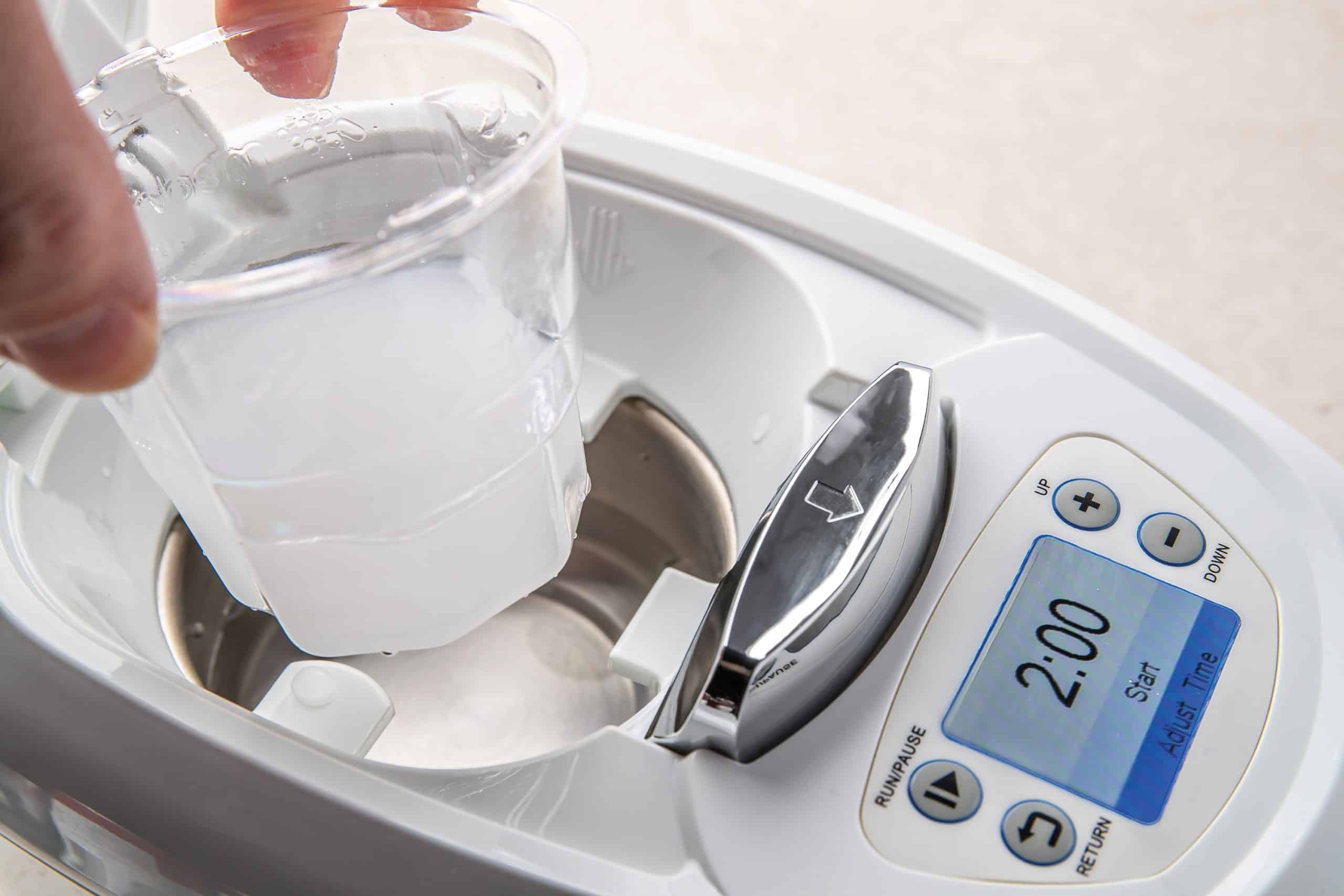
For people with dysphagia or those receiving nutrition via a PEG tube, assistive technology may include equipment that enables medications to be administered safely and accurately where standard tablet administration is not possible. Depending on the participant’s disability, clinical need, and intended use, equipment that assists with preparing medications for safe administration may be considered Assistive Technology if it supports disability-related functional needs and meets the NDIS funding criteria.
For example, technology that:
- safely converts solid oral medications into a liquid form,
- improves medication adherence,
- reduces the risks associated with crushing tablets,
- supports carers to administer medications correctly, and
- enables safer medication administration in the home,
may be considered for funding where it is directly related to the participant’s disability and is supported by appropriate clinical evidence and recommendations.
It is important to note that the medications themselves are not funded by the NDIS – only eligible assistive technology and supports associated with a participant’s disability may be.
For more information, see the National Disability Insurance Agency guidance on Assistive Technology and the “reasonable and necessary” funding criteria.
Medasyst can provide further product information and a quotation for submission to your plan manager to support your application.