

Eating is second nature for most people, but for others, nutrition is delivered through a tube. During Feeding Tube Awareness Week, we highlight the importance of enteral feeding—via nasogastric (NG), nasojejunal (NJ), or percutaneous endoscopic gastrostomy (PEG) tubes. Enteral feeding keeps people nourished and functioning when oral intake is unsafe or impossible. It also requires patience, precision, and careful problem-solving every day.
As a medical writer with over two decades of experience working alongside clinicians, carers, and patients, I have seen that enteral feeding is more than a clinical intervention—it is a lived experience, with challenges that rarely make it into textbooks.
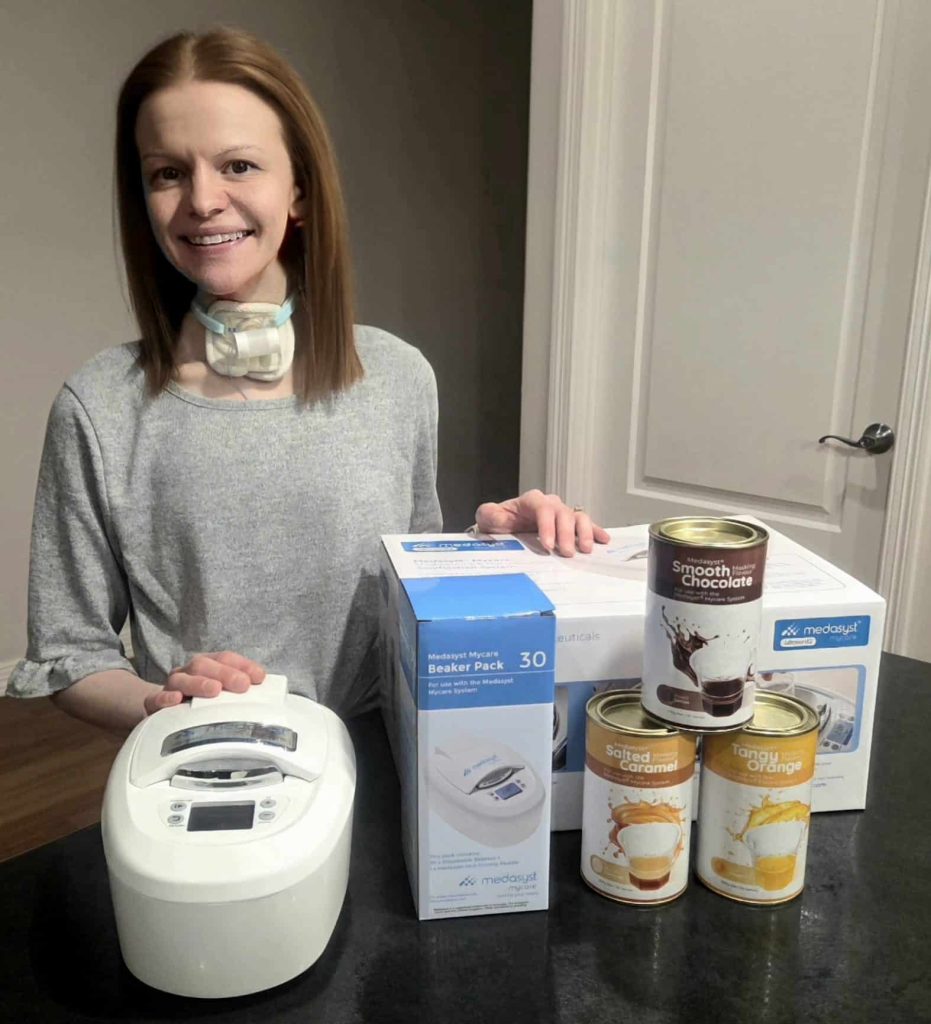
We are also celebrating our 2025 competition winner, Miriam. She received a complete starter pack worth $695 AUD, including spare Beakers, all three masking flavours, the Medasyst Mycare unit, and more. Congratulations, Miriam, and thank you for your kind Google review.
The Main Enteral Feeding Routes
Enteral feeding practices are guided by ASPEN and ESPEN, which provide internationally recognised standards for care in both hospitals and home settings.
NG (Nasogastric) Tubes
NG tubes are inserted through the nose into the stomach and are generally used for short-term feeding (less than four weeks). They are quick to place and remove but can be uncomfortable, visible, and prone to displacement. Many patients experience throat irritation, reflux, or gagging.
NJ (Nasojejunal) Tubes
NJ tubes extend past the stomach into the jejunum. They are used when gastric feeding causes aspiration, delayed emptying, or severe reflux. NJ tubes are narrower and more delicate, making them more susceptible to blockage.
PEG (Percutaneous Endoscopic Gastrostomy) Tubes
PEG tubes are inserted directly through the abdominal wall into the stomach and are preferred for long-term feeding. They remain in place for months or years but require careful stoma care to avoid infection and mechanical issues.
Across all feeding routes, one challenge is universal: administering medication safely and consistently.
Medication Administration Challenges
Most medications are designed for people who can swallow tablets, which creates difficulties for tube-fed patients. Tablets are often crushed and mixed with water to pass through a tube. While this seems simple, it carries significant risks.
Risks of Crushing Tablets
- Inconsistent particle size: Manual crushing leaves large fragments or gritty residue that may block NG, NJ, or PEG tubes.
- Poor dispersion: Some tablets clump, float, or settle unevenly when mixed with water, leading to erratic dosing.
- Tube and stoma damage: Coarse particles can abrade tubes and valves, increasing the risk of leaks or failures.
- Blocked tubes: A blocked tube can cause missed medication, interrupted nutrition, emergency replacement, or hospital readmission.
- Medication safety risks: Some tablets should never be crushed due to modified-release coatings or stability issues, as crushing may alter absorption or cause side effects.
ASPEN and ESPEN emphasise that safe medication delivery via enteral tubes is as important as the feeding itself. Carers often lack adequate tools to manage this effectively.
Consequences of Tube Blockages
Blocked tubes can lead to:
- Dehydration or malnutrition due to delayed feeds
- Missed or partial medication doses
- Emergency tube replacement
- Stoma trauma or infection
- Hospital admission for issues that began at home
These situations are stressful, costly, and preventable.
A Safer Approach: Fine Particles and True Dispersion
The Medasyst Mycare device addresses these challenges by producing extremely fine particles that disperse evenly in liquid, creating a smooth suspension for safe enteral delivery.
Key benefits include:
- Uniform dispersion: Consistent dosing from start to finish
- Low liquid volume: Effective in as little as 20 ml, ideal for fluid-restricted or jejunal feeds
- Reduced blockage risk: Fine particles pass cleanly through NG, NJ, and PEG tubes
- Gentle on tubes and devices: Reduces mechanical stress and prolongs tube integrity
- Predictable medication delivery: Increases carer confidence and reduces trial-and-error
Traditional crushing remains dependent on technique and strength, leaving patients at risk if done incorrectly.
Supporting Carers and Patients
Enteral feeding already presents daily challenges, including equipment management, hygiene, discomfort, and social disruption. Medication administration should not add another layer of risk.
Tools like Medasyst Mycare help carers deliver medication safely and consistently, protecting both the patient and continuity of care.
Looking Ahead
As awareness grows around safer enteral practices, we look forward to supporting Feeding Tube Awareness Week, 1–7 February 2026 and continuing the conversation about providing nutrition and medication safely, confidently, and with dignity. Thank you to ausEE Inc for including us. Read more in the partnered online digital magazine The Blend.