

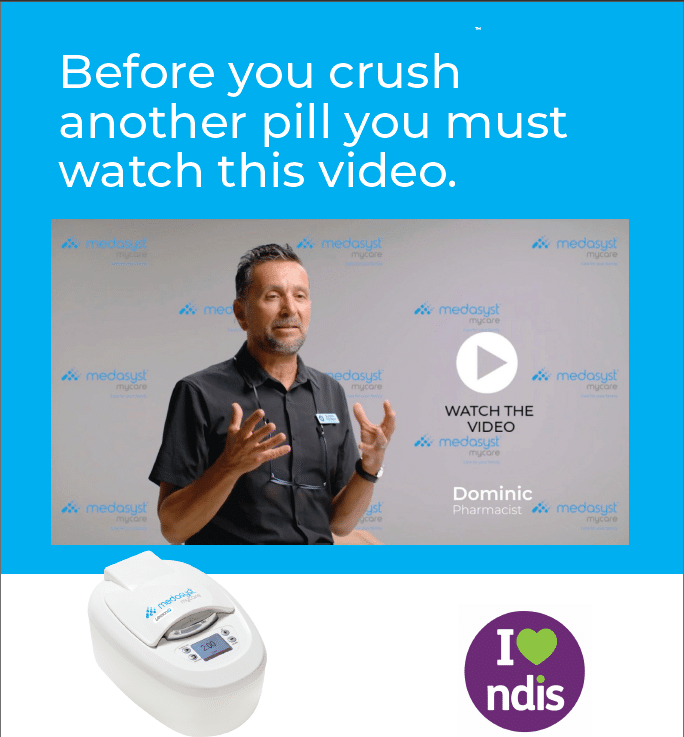
The Hidden Dangers of Crushing Pills — And a Safer Way Forward – Medasyst: safe medication administration
Let’s start with something most people won’t admit out loud: Safe Medication Administration
Swallowing pills can be hard.
Not mildly inconvenient — genuinely difficult. Large tablets trigger gag reflexes. Capsules feel like they’ll lodge halfway down. For many, every dose comes with anxiety.
And yet, millions of people deal with this every day.
Clinical data shows that at least 4 in 10 people experience significant difficulty taking oral medication. That includes individuals with diagnosed dysphagia (swallowing disorders) — and many more who simply struggle but push through it quietly.
So what do people do?
They improvise.
They split tablets with kitchen knives.
They crush pills with spoons.
They hide medication in yogurt, jam, applesauce, or custard.
It feels practical. Logical. Harmless.
As long as the medicine gets inside the body, it should work — right?
Not necessarily. Dont rush to crush:
A Tablet Is Not Just Powder Pressed Into Shape: safe medication administration
Modern medication is not a lump of compressed chemicals.
It is a carefully engineered delivery system.
Every tablet is designed to release medication at a specific rate, in a specific location, under specific biological conditions. When you crush or split it, you are not just changing its shape — you are dismantling that delivery system.
The consequences can be serious.
The Risk of “Dose Dumping”: safe medication administration
If you have ever seen letters like ER, XR, CR, or SR at the end of a drug name, those are not branding decorations.
They stand for:
-
Extended Release
-
Controlled Release
-
Sustained Release
These tablets are designed to release medication slowly over 12–24 hours. Think of them like a drip irrigation system rather than a bucket of water dumped all at once.
When you crush one of these tablets, you destroy that release mechanism.
Instead of receiving a slow, controlled dose, the body absorbs the entire 24-hour amount immediately. This phenomenon is known as dose dumping.
The result?
-
Dangerous spikes in blood concentration
-
Increased toxicity
-
Risk of overdose
With certain medications — including long-acting opioids or blood pressure drugs — dose dumping can cause severe harm, including respiratory depression or life-threatening complications.
Crushing modified-release medication is widely contraindicated for this reason.
The Purpose of Coatings (And Why They Matter): safe medication administration
Many tablets have a shiny outer coating. It may look cosmetic, but often it serves a critical function.
Enteric coatings (often marked EC) act as a protective shield.
They either:
-
Protect the medication from being destroyed by stomach acid
-
Protect the stomach lining from irritation caused by the drug
If you crush an enteric-coated tablet, you remove that protection.
Best-case scenario: the stomach acid destroys the drug before it works.
Worst-case scenario: the exposed medication irritates the stomach lining, potentially causing ulcers or severe inflammation.
Even Splitting “Simple” Tablets Is Risky
You might assume that plain immediate-release tablets are safe to split.
Not always.
Unless a tablet is scored (designed with a split line), dividing it manually creates dose variation. Studies show unscored tablets can vary by 15–25% per half.
For many drugs, that may not matter.
For others, it absolutely does.
Some medications have what is called a narrow therapeutic index — meaning the difference between an effective dose and a toxic dose is very small.
These include:
-
Anticoagulants (blood thinners)
-
Anti-epileptics
-
Thyroid hormones
-
Certain chemotherapy agents
A 25% underdose of a seizure medication could trigger breakthrough seizures.
A 25% overdose of a blood thinner could cause internal bleeding.
Small errors can have immediate clinical consequences.
The Hidden Chemistry of Mixing Medication with Food
Many people turn to the “spoonful of sugar” method — mixing medication into yogurt, fruit puree, honey, or custard.
It seems harmless. It’s just food.
But food is chemistry.
For example:
Dairy products contain calcium.
Some antibiotics bind chemically to calcium, which prevents absorption. The medication passes through the body unused.
Fruit purees are acidic.
Acidity can degrade certain drugs before they are absorbed.
Mixing medication with food introduces uncontrolled chemical variables. These combinations are not tested or validated by manufacturers.
In many cases, the drug simply does not work as intended.
The Taste and Compliance Problem
When tablets are crushed, their core ingredients are exposed. Many active pharmaceutical compounds are intensely bitter.
Mixing crushed medication into applesauce or yogurt rarely masks that bitterness completely.
For children, elderly patients, or individuals with cognitive decline, this creates:
-
Aversion to food
-
Distrust during feeding
-
Increased gag reflex
-
Reduced medication compliance
Over time, mealtimes can become stressful, adversarial experiences.
A Safer Alternative: Medicist MyCare
If crushing, splitting, and mixing are unsafe, what is the solution for people who genuinely cannot swallow tablets?
This is where technology offers a clinically responsible alternative.
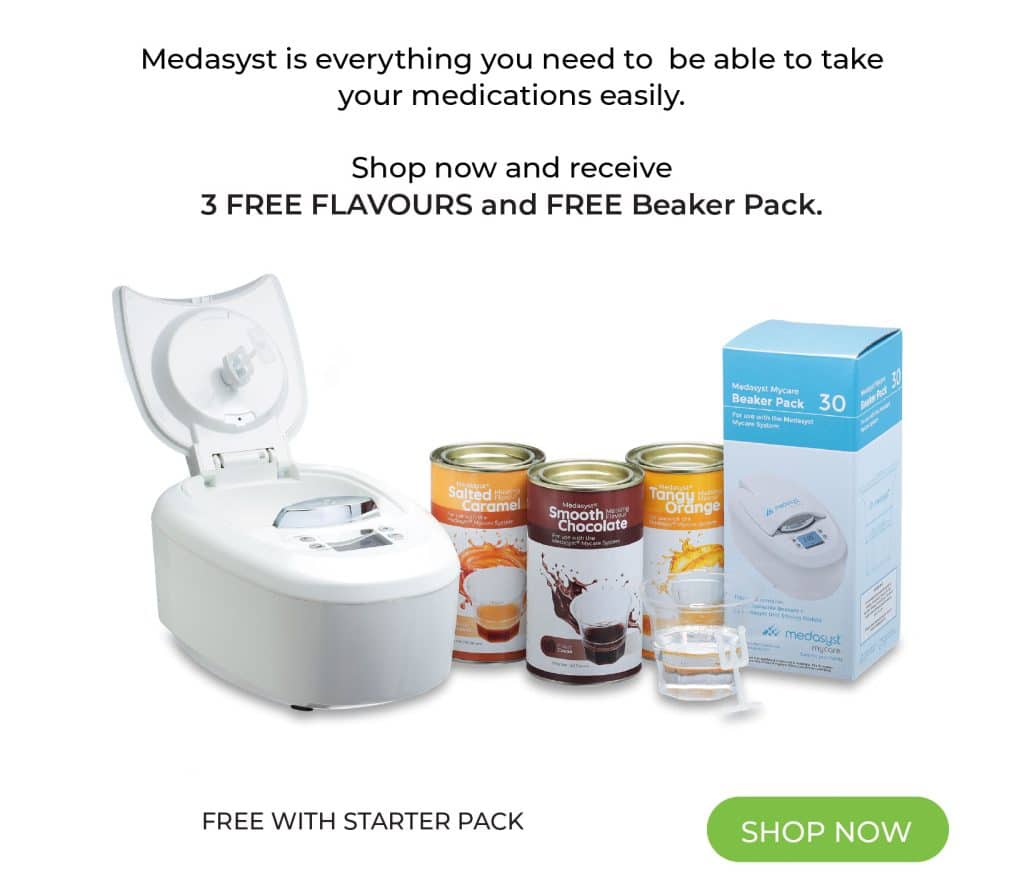
Medicist MyCare is not a pill crusher.
It is an ultrasonic medication liquefier.
Using high-frequency ultrasonic waves, the system gently converts solid tablets into a smooth liquid form — without manually crushing them and without introducing food-based chemical interactions.
Why This Matters
1. It preserves drug integrity.
The medication is broken down into extremely small particles without altering its intended chemical structure.
2. It supports accurate dosing.
Manual crushing can result in up to 50% dose loss due to residue left behind in bowls, cups, or crushing devices. Medicist delivers up to 98% of the intended dose within a contained vessel.
3. It protects caregivers.
Crushing medication can release airborne particles, especially dangerous with chemotherapy agents or hormonal treatments. Medicist contains the process within a sealed system, reducing exposure risk.
4. It reduces choking and aspiration risk.
For individuals with dysphagia, a smooth, consistent liquid is significantly safer than gritty crushed slurries.
5. It prevents feeding tube blockages.
Hand-crushed medication often clogs PEG tubes, leading to medical emergencies. A properly liquefied solution flows cleanly.
Addressing Taste Without Chemical Interference
Medicist-compatible flavor options — such as chocolate, caramel, or orange — are formulated to mask bitterness without introducing ingredients that interfere with drug absorption.
This improves palatability while maintaining therapeutic effectiveness.
The Financial Perspective: Safe Medication Administration
Many families already spend money on:
-
Yogurt
-
Fruit purees
-
Specialty thickeners
-
Jam or honey for masking medication
Over time, those recurring purchases add up.
The cost of a purpose-built device is often comparable when viewed annually — but with far greater safety and consistency.
Moving From Improvisation to Precision: Safe Medication Administration
For years, people have treated medication modification as a kitchen task.
But medication is chemistry. It is pharmacology. It is engineered therapy.
Crushing tablets, splitting unscored pills, and mixing drugs with pantry ingredients turns patients and caregivers into unintentional amateur chemists.
If swallowing tablets is difficult, the answer is not improvisation.
It is precision.
It is safety.
It is respecting the science behind the medicine.
A Final Thought: Safe Medication Administration
Open your medicine cabinet.
Look for labels that read ER, XR, CR, SR, or EC.
Ask yourself:
How often have I modified this medication without understanding how it was designed to work?
If you or someone in your care struggles with swallowing solid medication, there are safer options available.
Medicist MyCare offers a way to preserve the intended efficacy of medication while removing the physical barrier of swallowing — without creating new risks in the process.
Medication should heal — not introduce preventable harm.
For more information about safe medication administration solutions, contact Medasyst today.