

How Medasyst Mycare Is Revolutionising Medication Delivery
Every day, caregivers across homes, hospitals, and aged-care facilities face the same challenge: helping someone swallow tablets safely. Whether it’s an ageing parent with dementia, a child with sensory sensitivities, or a patient with dysphagia, traditional medication methods are often stressful and unsafe.
For over a century, pills have been crushed by hand using mortars, spoons, or improvised tools. It’s messy, time-consuming, physically demanding, and carries significant safety risks. At Medasyst Mycare, we believe it’s time to bring medication preparation into the modern era.
This article explores why traditional pill crushing puts patients and caregivers at risk, and how ultrasonic medication liquefaction is setting a new standard for safe, accurate, and dignified care at home.

The Hidden Risks of Crushing Tablets at Home
Crushing tablets by hand may feel familiar, but evidence shows it introduces multiple hazards.
Dose Loss: The Silent Medication Failure
Hand-crushing tablets can cause medication to turn into dust that sticks to the bowl, spoon, or cup, spills on benchtops, or becomes airborne. Studies show this can result in up to 50% dose loss, meaning a patient prescribed 100mg may only receive 50mg without anyone noticing.
This can lead doctors to increase doses unnecessarily, worsening symptoms and side effects. The issue isn’t the medicine—it’s how it’s delivered.
Inconsistent Particle Size and Swallowing Risks
Hand-crushed tablets are rarely uniform. Some fragments remain large while others become powder. This unevenness can cause coughing, choking, or aspiration in patients with swallowing difficulties and can block feeding tubes, leading to invasive interventions.
Caregiver Injury and Occupational Strain
Crushing tablets repeatedly requires physical effort. Over time, nurses and caregivers risk repetitive strain injuries, carpal tunnel syndrome, chronic wrist pain, and tendon damage. What should be a care task can become a source of injury and stress.
Why Ultrasonic Medication Liquefaction Is Different
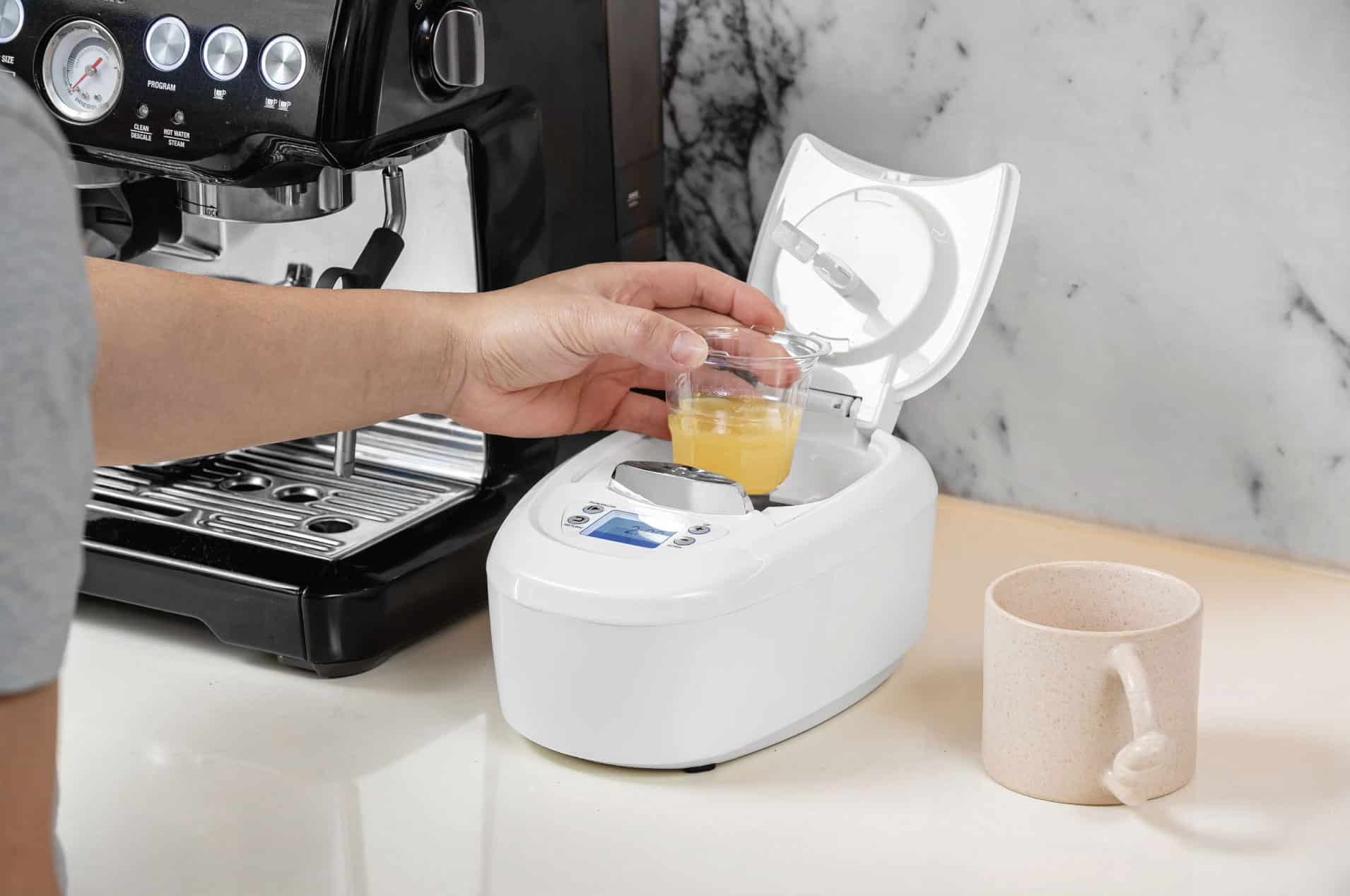
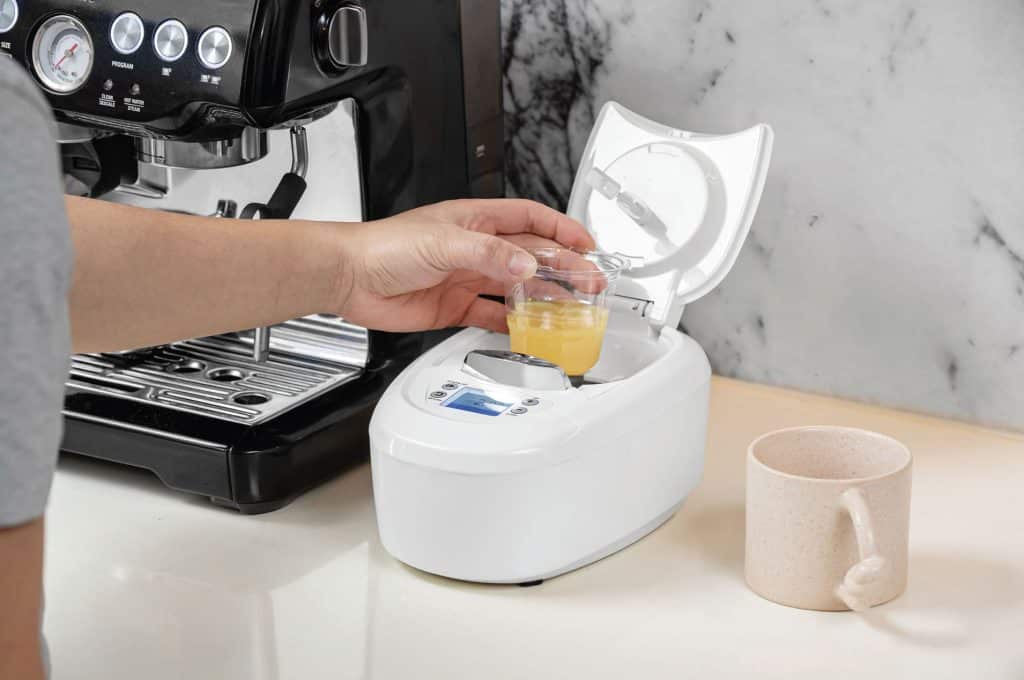
The Medasyst Mycare unit replaces brute force with precision. Using ultrasonic energy, it dissolves tablets into a smooth liquid solution without blades, grinding, or dust.
Sound energy travels through water in a closed disposable beaker, breaking tablets down at a microscopic level. The result is a uniform liquid dose safe to swallow or administer through feeding tubes, with over 98% medication delivery accuracy.
Closed-System Safety for Caregivers and Patients
Traditional pill crushing creates airborne particles that caregivers inhale daily, risking allergies, sensitivities, or unintended medication intake. Medasyst Mycare’s closed system and single-use ultra-clear disposable beakers prevent dust, cross-contamination, and residue between doses.
Taste Matters
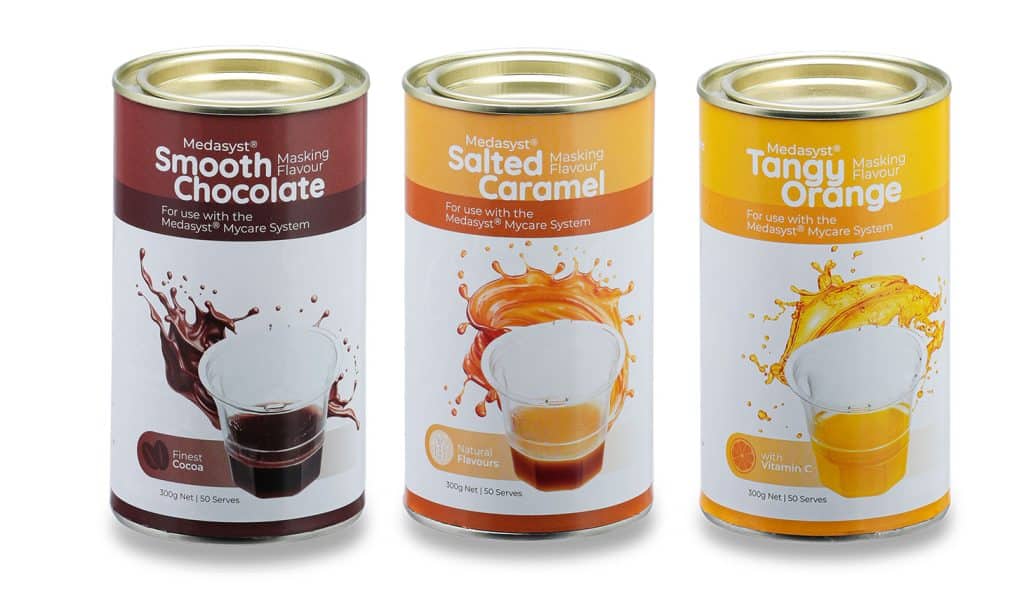
Medication compliance is closely linked to taste. Mycare supports pharmaceutical flavour masking options—such as salted caramel, chocolate, and orange—making medication easier for children, people with dementia, and those sensitive to bitterness.
Designed for Home Use
The Mycare unit is built for the home, not hospitals. Its design is intuitive, safe, and easy to use:
- Durable ABS body
- Large, clear LCD screen
- Oversized, easy-to-press buttons
- Gentle opening lid to prevent spills
- Simple operation with minimal steps
No medical training is required. Just accurate, consistent medication preparation—every time.

Connected Care Through Mobile Technology
In 2026, Medasyst Mycare expands beyond hardware with a mobile app for medication tracking. The app logs when medication is prepared, creating a digital record for families, carers, and healthcare providers. Digital tracking ensures clarity, confidence, and peace of mind—especially for remote care.
Global Expansion and Recognition
Medasyst Mycare is recognised under Australia’s NDIS and is set to launch in the United States in Q3 2026, bringing ultrasonic medication liquefaction to a global audience. Safe medication delivery should be universal.
Important Safety Note
Not all tablets can be liquefied. Medications that must never be crushed or liquefied include:
- Enteric-coated tablets
- Sustained-release tablets
- Slow-release formulations
Always consult a doctor or pharmacist before altering any medication. Technology supports safe decisions but does not replace medical advice.
A Better Way Forward
For decades, pill crushing has been considered “good enough.” It isn’t. Medasyst Mycare replaces guesswork with accuracy, strain with safety, and stress with dignity. It supports carers, protects patients, and ensures medication is delivered as prescribed.
Sometimes progress isn’t about new drugs or complex procedures. Sometimes it’s about finally fixing the basics. In-home medication care is long overdue for this upgrade.